- (912) 673-0001
- 74 Jody Ln, Kingsland, GA 31548, United States

Quicklinks
Our Services
Hail Damage vs Wind Damage: What Roofers Look For During an Inspection
- Home
- Hail Damage vs Wind Damage

One of the most frustrating things about roof leaks is how hard they can be to trace.
A stain shows up on the ceiling and immediately your mind starts racing. Is the roof failing? Did shingles blow off during the last storm? Is water coming in around a vent? Is it serious? How long has it been happening?
Around Kingsland, St. Marys, Woodbine, and the rest of Camden County, two of the most common causes of roof leaks are shingle failures and roof vent leaks. The problem is they can look very similar from inside the house at first.
Both can leave stains.
Both can drip during storms.
Both can create attic moisture.
Both can slowly spread if ignored.
But the way they happen and the way roofers repair them is usually very different.
Understanding the difference helps homeowners know what signs to watch for, when a repair may be simple, and when it is time to stop guessing and schedule an inspection.
A storm passes through Kingsland, the wind finally settles down, and you walk outside to see if everything looks okay.
Nothing seems terrible.
There are a few branches in the yard. Maybe some leaves in the gutters. The roof is still there, and you do not see water dripping from the ceiling.
So you figure you got lucky.
Maybe you did.
But storm damage is not always that obvious.
Wind and hail can affect a roof in very different ways, and some of the signs are difficult to spot from the ground. A shingle does not have to disappear completely for wind to damage it. Hail does not have to punch a hole through the roof to shorten the life of roofing materials.
For homeowners in Kingsland, St. Marys, Woodbine, and throughout Camden County, knowing what roofers actually look for after severe weather can make the whole inspection process a little less confusing.
Wind and Hail Leave Different Clues
Wind damage tends to involve movement.
Hail damage is usually associated with impact.
That sounds simple enough, but the difference is important when inspecting a roof.
Strong wind can get underneath shingles and lift them. Hail strikes the surface from above and can damage shingles without moving them very much at all.
Sometimes both happen during the same storm.
That is why a professional roof inspection looks at the entire roofing system instead of focusing on one missing shingle or one suspicious mark.
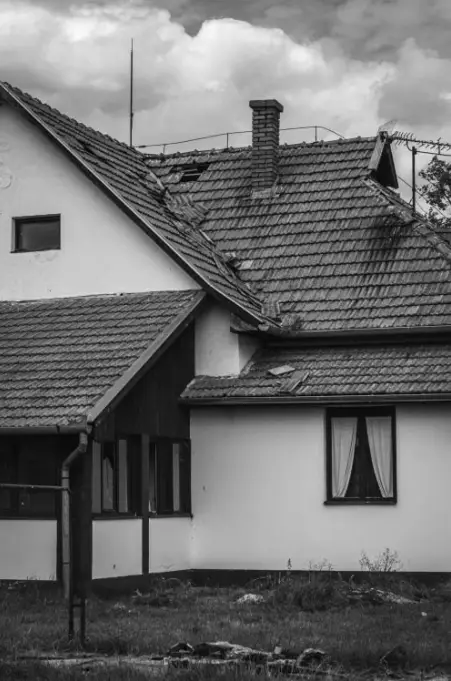
What Wind Damage Looks Like
Imagine bending a piece of cardboard backward and then putting it flat again.
It may look reasonably normal from a distance, but the bend has weakened it.
Something similar can happen with shingles.
Wind lifts the shingle, bends it backward, and creates a crease. The shingle may settle back into place after the storm, but the material has already been stressed.
During a storm damage roof inspection, roofers look closely for these subtle signs because they can indicate damage even when the shingle is still attached.
What Hail Damage Looks Like
Hail damage tends to leave impact marks instead.
On asphalt shingles, those marks can appear as:
• Dark spots
• Missing granules
• Small dents
• Bruised areas
• Cracks around impact points
The size and appearance depend on several things, including hail size, wind speed, roof age, and roofing material.
A newer roof may respond differently than an older roof with brittle shingles.
That is one reason there is no simple rule saying a certain size hailstone automatically means a roof needs repair.
The roof itself needs to be evaluated.
Why Granule Loss Gets Attention
Those little granules covering asphalt shingles are not there just for appearance.
They help protect the asphalt material underneath from sunlight and weather exposure.
When hail strikes a shingle hard enough, some granules can loosen or disappear.
A few loose granules do not automatically mean serious hail damage. Shingles naturally lose some granules over time.
Roofers look at the pattern.
Fresh impact areas can look different from ordinary age related wear, especially when similar marks appear across multiple parts of the roof.
Roofers Look Beyond the Shingles
This is something homeowners sometimes find surprising.
During a storm inspection, the shingles are only part of the story.
Roofers may also check:
• Gutters
• Downspouts
• Roof vents
• Flashing
• Metal components
• Ridge caps
• Siding
• Other exposed surfaces
Why?
Because these areas can provide additional clues about what happened during the storm.
Hail may leave dents on softer metal surfaces. Wind may bend flashing or loosen roof accessories.
Looking at the entire property helps create a clearer picture.
The Direction of Damage Matters
Storm damage often has a pattern.
Wind usually affects certain roof slopes more heavily depending on the direction of the storm.
Hail can also strike one side of a home harder when strong winds are pushing it at an angle.
Roofers pay attention to where the damage appears and whether the pattern makes sense with the weather event.
Random wear scattered across an older roof can look very different from concentrated storm related damage.
Roof Age Can Complicate the Inspection
An older roof already has a history.
It may have:
• Granule loss
• Previous repairs
• Brittle shingles
• Discoloration
• General wear
That does not mean storm damage cannot happen to an older roof.
It simply means the inspector has to separate existing wear from newer damage.
This distinction also matters if an insurance claim is being considered.
Georgia’s Office of Commissioner of Insurance recommends that homeowners document property damage, keep records, and review their individual policy when dealing with storm related losses. You can read the state’s guidance through the Georgia Office of Commissioner of Insurance.
What Homeowners Can Check Safely
You can gather useful information without getting on the roof.
After a storm, walk around the property and look for:
• Shingles in the yard
• Fallen branches
• Bent gutters
• Pieces of flashing
• Damaged siding
• Ceiling stains inside
• Water in the attic
Take photos while everything is still fresh.
If you find roofing materials on the ground, photograph where you found them before cleaning up.
You can also look at the roof from the ground using your phone camera zoom.
But avoid climbing onto the roof yourself. Storm damaged roofing can be slippery, loose, or weaker than it appears.
What Happens If Damage Is Found?
Finding storm damage does not automatically mean you need a new roof.
Sometimes the damage is limited enough for roof repair.
Other times an inspection reveals damage across several areas of the roofing system.
The right approach depends on:
• Roof age
• Amount of damage
• Location of damage
• Condition before the storm
• Whether water has entered the home
A good inspection should help answer those questions instead of jumping straight to the biggest possible project.
Do Not Wait for a Ceiling Leak
This is probably the biggest takeaway.
A roof can be storm damaged without leaking immediately.
Wind may break a shingle seal today.
Hail may damage the surface of a shingle today.
The actual water intrusion might not happen until another storm comes through weeks later.
By then, it becomes harder for a homeowner to remember exactly when the original damage happened.
If your neighborhood experienced strong wind or hail and you suspect something changed on the roof, an inspection can provide answers before the next heavy rain arrives.
FAQ About Hail and Wind Roof Damage
Can wind damage shingles without blowing them off?
Yes. Wind can lift shingles, break their seals, or crease them while leaving them attached to the roof.
Can I see hail damage from the ground?
Sometimes, but many hail impact marks are difficult to identify without a closer inspection.
Does hail damage always cause an immediate leak?
No. Hail can weaken roofing materials without creating an immediate opening for water.
What do roofers check besides shingles?
Roofers may inspect gutters, flashing, vents, ridge caps, siding, and other exposed materials for signs of storm impact.
Does finding storm damage mean I need a roof replacement?
Not necessarily. Localized damage may be repairable. The overall condition of the roof needs to be considered.
Should I take pictures after a storm?
Yes. Photograph visible damage, roofing materials in the yard, fallen branches, interior stains, and anything else that changed during the storm.
Final Thoughts
Wind damage and hail damage do not always announce themselves with a giant hole in the roof.
Sometimes it is one lifted shingle.
Sometimes it is a cluster of impact marks.
Sometimes everything looks fine until the next heavy rain.
That is why the inspection matters.
If strong wind, hail, or severe weather has recently moved through Kingsland, St. Marys, Woodbine, or another part of Camden County, Southern Roofers can inspect the roofing system, identify signs of storm damage, and explain what actually needs attention.
Catching the problem now is a lot easier than discovering it through a ceiling stain later.
Share on
Recent posts
Hail Damage vs Wind Damage: What Roofers Look…
How Long Does a Roof Replacement Take in…
Signs It’s Time for a Roof Replacement in…
Projects


Related Posts
Hail Damage vs Wind Damage: What Roofers Look For…
(912) 673-0001 74 Jody Ln, Kingsland, GA 31548, United States Quicklinks Home About Services Blog…
How Long Does a Roof Replacement Take in Kingsland…
(912) 673-0001 74 Jody Ln, Kingsland, GA 31548, United States Quicklinks Home About Services Blog…
Signs It’s Time for a Roof Replacement in Kingsland…
(912) 673-0001 74 Jody Ln, Kingsland, GA 31548, United States Quicklinks Home About Services Blog…
Your Trustworthy, Trusty Roofing Experts At Southern Roofers. We provide professional roofing to the homes and commercial buildings throughout Kingsland, GA and the surrounding vicinity.
Quick Links
Contact info
- (912) 673-0001
- 74 Jody Ln, Kingsland, GA 31548, United States
© 2025 Southern Roofers. All Rights Reserved.