- (912) 673-0001
- 74 Jody Ln, Kingsland, GA 31548, United States

Quicklinks
Our Services
Why Is My Roof Leaking? The Most Common Causes We See in Kingsland
- Home
- Why Is My Roof Leaking?
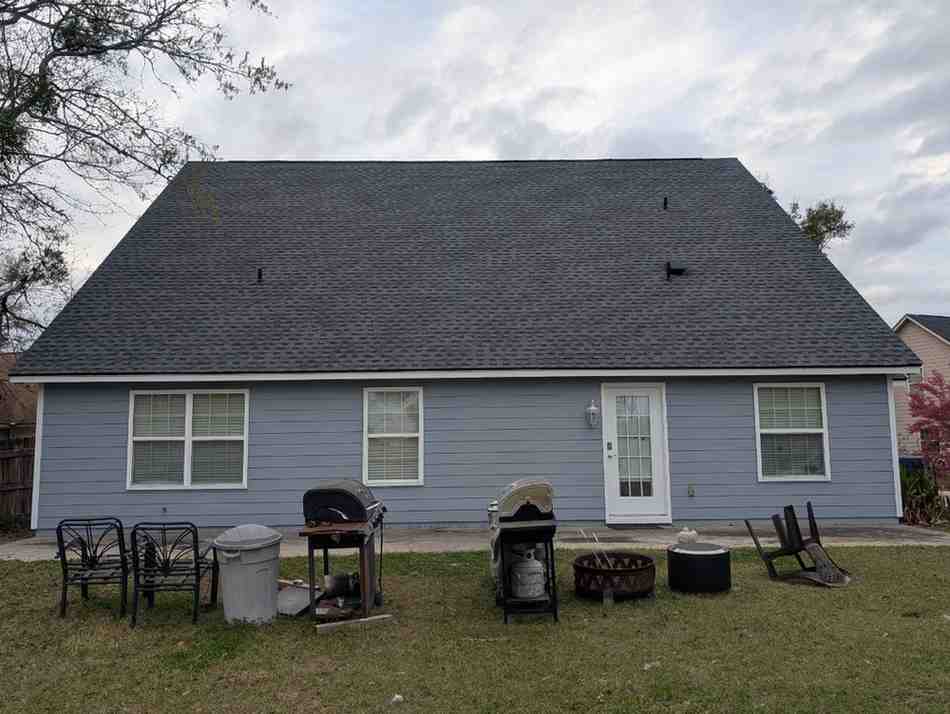
Why Is My Roof Leaking? The Most Common Causes We See in Kingsland
A roof leak can make your stomach drop. One day everything looks fine, then you notice a brown spot on the ceiling or a drip that shows up only when the rain really comes down.
If you are in Kingsland, St. Marys, Woodbine, or anywhere in Camden County, most roof leaks come down to a few common issues. A shingle gets lifted by wind, flashing starts to loosen around a chimney or wall, a vent boot cracks from sun exposure, or gutters back water up where it should not be going. Our climate does not help either. Long stretches of heat can dry materials out, humidity can create moisture problems that look like leaks, and storms can turn a small weak spot into a real mess.
This guide breaks down what we usually see, what you can check safely from the ground, what not to do, and when it is time to call a roofer.
Quick truth about roof leaks in real life
The stain on your ceiling is not always directly under the problem. Water can travel along the underside of the roof deck and down rafters before it shows up inside. That is why two leaks can look identical from the living room but have totally different causes up top.
So if you are trying to “trace the drip,” do not beat yourself up if it does not make sense. Roof leaks rarely follow a straight line.
The most common reasons roofs leak in Kingsland and Camden County
1. Wind lifted shingles and aging shingles
In this area, wind is a big deal. Even if you do not lose a ton of shingles, a few can lift just enough to break the seal. Once that seal is broken, wind driven rain can get underneath and start traveling.
Heat plays a role too. Over time, shingles can dry out and get brittle, which makes them more likely to crack or lose granules.
Signs this may be the issue:
• You see shingles that look curled or uneven
• You notice loose tabs
• Leaks show up during storms or when the rain is blowing sideways
• You find shingle granules building up in gutters
2. Flashing problems around chimneys, walls, and valleys
If shingles are the main “skin” of the roof, flashing is the part that seals the tricky transitions. Chimneys, sidewalls, valleys, and roof lines that meet vertical surfaces all rely on flashing to keep water out.
When flashing is bent, rusted, or no longer sealed properly, water finds the weak point fast. This is one of the most common things we find when someone calls saying, “I swear it is just one little leak.”
Common flashing leak locations:
• Chimneys
• Roof to wall intersections
• Valleys where two slopes meet
• Dormers and sidewalls
3. Leaks around roof penetrations like vents and pipe boots
Roof penetrations are sneaky. Plumbing vents, bathroom vents, and other roof openings need boots and seals that hold up under years of sun and heat. Those rubber boots can crack, and the seals around vents can loosen with time.
You might be dealing with a penetration leak if:
• The leak seems to be near a bathroom, laundry, or kitchen
• It leaks after steady rain, not only during storms
• The stain is more toward the middle of the house
4. Gutters that overflow and push water where it should not go
Gutters are not just for curb appeal. They control where water goes. When gutters clog, water can back up at the roof edge and soak into fascia and soffits, then work its way into the roof structure.
If you have seen gutters overflowing during a storm, do not ignore it. That is one of those “small” problems that can create a bigger one.
Signs to watch for:
• Overflowing gutters
• Water marks on fascia or soffit
• Dripping along the roof edge
• Debris piling up in gutters
5. Moisture that looks like a leak but is really humidity and ventilation
Here is a curveball that happens in humid areas. Sometimes what looks like a roof leak is actually moisture building up in the attic from poor ventilation. That trapped moisture can lead to mold, damp insulation, and staining that freaks homeowners out.
Clues it might be moisture related:
• Musty smell in the attic
• Damp insulation even without a recent storm
• Mold or mildew on roof decking or rafters
6. Storm damage that is easy to miss from the ground
Storm damage does not always look dramatic. Sometimes it is one lifted shingle, a loosened flashing edge, or debris impact in one spot. Georgia storms can create exactly these kinds of issues.
If your leak started after a storm, that timing is important. It usually means you are dealing with damage, not just age.
Signs the leak is getting worse
A small leak can become a big repair if it keeps feeding water into the same area.
Take it seriously if you see:
• A ceiling stain that grows
• Bubbling paint
• Sagging drywall
• Musty odors or visible mold
• Wet insulation in the attic
• Any dripping near lights or electrical fixtures
If water is near electrical, turn off power to that area if you can do it safely and call a professional.
What to do right now without getting on the roof?
You can do a lot from inside and from the ground.
Protect the inside first
Put a bucket down, move furniture, and keep an eye on the ceiling. If the ceiling is bulging with trapped water, draining it in a controlled way into a bucket can prevent a bigger collapse.
Take photos
Take photos of the stain, the drip, and anything you see outside from the ground. If the leak is storm related, photos help document what happened. Insurance often focuses on sudden damage from covered events versus wear and tear.
Do a safe walkaround
From the ground, look for missing shingles, debris, sagging gutters, and downspouts dumping water right next to the house.
Check the attic if it is safe
If you can safely access the attic, bring a flashlight. Look for wet insulation, dark staining, and any active dripping. Do not step on drywall, only step on framing.
What not to do
This is where good intentions cause trouble.
- Do not climb on a wet roof
- Do not slap sealant everywhere and hope it holds
- Do not pressure wash shingles
- Do not assume the leak is directly above the stain
- Do not wait until “next weekend” if the stain is spreading
What a good roof leak repair visit should look like?
A real leak repair is not guesswork. It is a process.
A proper visit usually includes:
- Inspecting the roof surface with extra attention to flashing, penetrations, valleys, and edges
- Checking inside the attic or home when needed to trace water paths
- Explaining what failed and why
- Providing a clear estimate with a defined scope
Southern Roofers specifically notes attic or interior checks when needed, clear estimates, code compliant repairs, and a final walkthrough.
Repair or replace, how to think about it
If the roof is mostly in good shape and the problem is isolated, repair usually makes sense.
If you have repeated leaks, widespread shingle wear, or multiple trouble spots, it may be smarter to talk about replacement. Chasing leaks one by one can become the expensive option.
What affects roof leak repair cost in Kingsland?
Pricing depends on what the leak is and how hard it is to access.
Common price drivers include:
- Roof pitch and height
- Whether decking or underlayment is damaged
- Flashing repair versus full flashing rebuild
- Material type
- How much water got inside and what needs drying out
How to reduce the chances of another leak?
A few habits can help a lot:
- Keep gutters clear so water drains properly
- Trim overhanging branches
- Address small issues early after storms
- Schedule an inspection at least once a year and after major storms
- Make sure attic ventilation is doing what it should
FAQ: Roof leaks in Kingsland GA
What is the most common cause of a roof leak?
Most leaks start at weak points like flashing, vent boots, and damaged shingles, especially after storms.
My roof only leaks when it rains hard. What does that mean?
It often means wind driven rain is getting under lifted shingles, a flashing point is failing under heavy volume, or gutters are backing water up.
Is a ceiling stain always a roof leak?
Not always. It can be plumbing, HVAC drains, or attic condensation. An inspection can usually tell quickly.
Will homeowners insurance cover my roof leak?
It often covers sudden damage from a covered event, but it usually does not cover wear and tear or ignored maintenance issues.
How fast should I fix a roof leak?
As soon as you can. Water damage stacks up fast, especially if insulation and wood get soaked.
Do you need to go in the attic to find a leak?
Not always, but it helps trace the path. Southern Roofers notes they check inside when needed.
Need help with a roof leak in Kingsland?
If you have a ceiling stain, a drip, or a leak that only shows up during storms, it is worth getting it checked before it spreads.
Southern Roofers provides roof repair, inspections, and storm damage help for homeowners in Kingsland, St. Marys, Woodbine, and across Camden County. Call (912) 673 0001 to schedule an inspection and get a free estimate.
Share on
Recent posts
Water Stains on the Ceiling: Is It Always…
Roof Leaks Only During Heavy Rain in Kingsland…
Why Is My Roof Leaking? The Most Common…
Projects



Related Posts
Water Stains on the Ceiling: Is It Always the…
(912) 673-0001 74 Jody Ln, Kingsland, GA 31548, United States Quicklinks Home About Contact Our…
Roof Leaks Only During Heavy Rain in Kingsland GA:…
(912) 673-0001 74 Jody Ln, Kingsland, GA 31548, United States Quicklinks Home About Contact Our…
Why Is My Roof Leaking? The Most Common Causes…
(912) 673-0001 74 Jody Ln, Kingsland, GA 31548, United States Quicklinks Home About Contact Our…
Your Trustworthy, Trusty Roofing Experts At Southern Roofers. We provide professional roofing to the homes and commercial buildings throughout Kingsland, GA and the surrounding vicinity.
Quick Links
Contact info
- (912) 673-0001
- 74 Jody Ln, Kingsland, GA 31548, United States
© 2025 Southern Roofers. All Rights Reserved.